

White shoes seem to look great with any outfit, but unfortunately keeping white shoes white is always a big battle. Fortunately, the right knowledge on how to clean white shoes will enable you to get rid of daily stains and dirt without causing any permanent damage to your favorite pair.
Whether you are dealing with canvas shoes, leather shoes, or your everyday pair of trainers, learning how to clean white shoes without damaging the material with the best technique will bring their former glory back and help them stay fresher for longer.
To find out how to clean white shoes at home, first, you need to learn what the shoe material is so that you can best determine how to clean white shoes. These materials include canvas, leather, mesh, knit, and suede, and they all react differently to water and cleaning agents. Take out the laces, follow the product instructions, and always try to clean a concealed part of the shoe with your cleaning solution.
Brush off loose dirt with a soft cloth for routine white shoe care. Dot a bit of the cleaner onto a soft cloth or brush and work it into the shoe in small sections; do not soak the entire shoe. Wipe clean and let air dry.
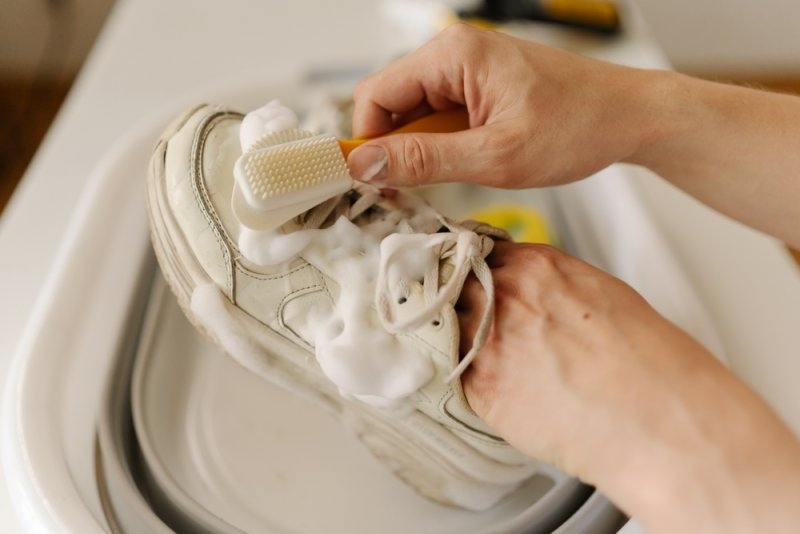
It's even easier to learn white sneaker cleaning at home when you clean the upper, the soles, and the laces separately. First, take the laces out and brush off dust and dried mud. Use a rag or brush to gently wash the shoe upper, especially the toe box, sides, heel, and around the eyelets.
For cleaning the normal white sneaker: Don't use more moisture than needed to remove dirt. Too much water will impact the glue and padding inside. Use only what you need and what is enough for normal dirt to save the shoes.
The complete home remedy to clean white canvas shoes, how to wash away wet mud on canvas shoes, and the way to clean white canvas shoes at home is to make sure the puddle of water dries up completely, then spray it off. Taking away things before the first wash helps to ensure that no dirt will run into the rest of your shoe fabric.
Choose a mild cleaning product and use a soft scrub brush and work over the canvas gently. Do not scrub aggressively, as this can make the fabric rough. When you are learning how to clean white canvas shoes, use small amounts of cleaning solution and wipe away any residue rather than soaking the material.
Leather is a material that can easily be damaged by too much water or harsh cleaning products, which is why it's best to clean up any surface dust with a soft cloth and then use a cleaner that's safe for leather applied to the cloth, not the shoes.
Lightly wipe over the leather and absorb excess product with a clean, slightly damp cloth. Dry sneakers naturally and avoid exposing them to heat. This technique helps when figuring out how to clean white shoes without them getting damaged.
Never jump to the strongest cleaner when you're learning how to remove stubborn stains from white shoes. Determine the shoe material and the stain first, then test a product on a discreet spot.
In general, rubber sole units are more resistant to brushing than their leather or delicate fabric counterparts. But a stubborn stain on the uppers can be frustrating. It's better to take a few mild brushes than repeatedly scrub one spot with too much force.
Having a good cleaning routine can help whiten your shoes and prevent discoloration or harm.
Such measures are also useful if you wish to learn how to clean white shoes without yellowing them. An overuse of product, residue, a lot of water, or heat can influence the finishing.
Why white shoes turn yellow when cleaned: When cleaning white shoes, the product remains stuck, the cleaner is wrong, the shoes become damp, or they are exposed to heat. Increasing the force on the brush does not always help and may also be damaging.
Learn how to get your white shoes white again without them going yellow by simply rubbing a very small amount of material-appropriate cleaner onto the shoes and then removing the residue, so don't use too much. Never place your shoes directly against a heater; use a hair dryer. For example, it’s always better to air dry naturally in a cool, well-ventilated place.
There are always other options, so you don't have to have a washing machine. Here's a guide on how to clean white shoes without a washing machine. When we teach you how to clean white shoes without a washing machine, you get extra control over pressure and moisture, ideal when it comes to leather, mesh, and glued parts.
Before anything else, take the laces out and wipe away loose debris. Next, slowly scrub the shoe's upper part with a cloth or a soft brush dampened with a cleanser designed for your shoes' material. After that, remove extra moisture and allow your shoes to dry in the air. This basic procedure can even help you figure out how to clean white shoes in the comfort of your own home.
2/10 Bleach can be a good option for some washable white canvas shoes when used at the right dilution level. But a method intended for canvas should not necessarily be adopted for cleaning leather, suede, mesh, or shoes with colored accents.
For daily white shoe washing, one that is made specifically to fit the shoe material should be the safest among all options. Make sure to do a test patch in a hidden area to ensure no damage will occur.
Never find yourself with a big stain, but the odd pesky mark? A quick brush down after walking outside and a wipe of fresh marks make a big difference. Wash your laces separately for an instantly cleaner shoe!
Keep your sneakers in a dry, well-ventilated area instead of a humid, enclosed space. Apply a protective treatment if possible to reduce the build-up of dirt in the long term. They will be easier to clean intermittently.
The easy way to learn how to clean white shoes without high-end products or powerful chemicals. Select the right cleaning method for your shoe material, avoid excess water, carefully clean away stains, and leave your shoes to air dry.
From white sneakers and canvas footwear to leather shoes, take the time to clean shoes at home easily and maintain their shine.
Many people use baking soda to clean shoes, but it's not recommended for all types of shoes or materials. Because of its texture, it could damage or change the surface of delicate materials. Always follow the shoe's care instructions and try it on an inconspicuous area before applying a homemade cleaner.
Toothpaste has been found effective on minor marks on certain rubber soles, but it isn't a total shoe cleaner. Certain formulas have abrasive fillers or other additives that can be left behind. On the whole, a product formulated for the shoe material is safer.
Clean mesh shoes with a soft brush or cloth and a little of the right cleaner. Do not soak the mesh, as it traps water. Work on dirty spots, remove residue, and let the shoes dry.
Clean the soles first. Brush off any loose dirt from the bottom of the shoes. Use a cleaner that is appropriate for rubber and a medium or soft brush, and scrub over the rubber bottom. Remove dirt afterwards, but do not allow it to get onto the upper of the shoes.
The frequency of cleaning is variable, as it depends on the frequency of wear and tear as well as the use of the shoes. A small mark should be cleaned immediately, while a more thorough clean can be done whenever the shoes get dirty.
This content was created by AI