

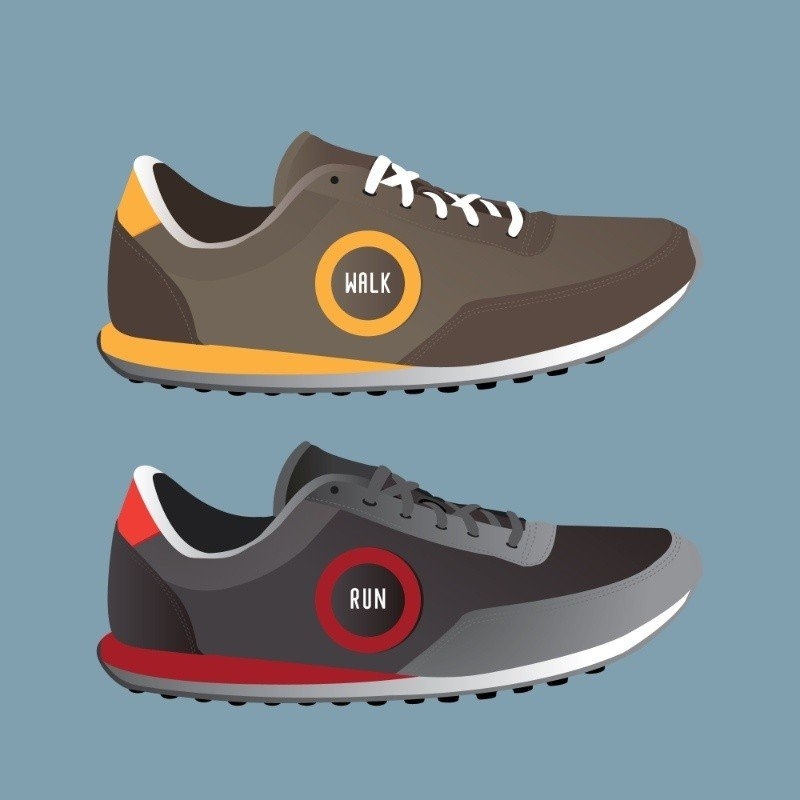
The perfect footwear for an activity can make a world of difference to your comfort, performance, and long-term foot health. Most people assume that all athletic shoes are created equal, but that couldn't be further from the truth. Running and walking exert different pressures on the body, so the shoes that support those specific actions are made differently. Knowing what shoe is right for what action helps to lessen discomfort.
Running and walking shoes are primarily different in the forces applied to the body during each movement. When running, a person experiences higher impact forces due to both feet being off the ground at once. Walking is different in that there is a continuous point of contact between the foot and the ground.
There is a constant roll through the foot from heel to toe during this action. Because of this, footwear needs to promote different movement types. Picking the correct shoe increases comfort, decreases fatigue, and aids in preventing a wide array of foot/joint problems.
The primary difference between a running shoe and a walking shoe is the support they provide for the action they are designed to support. Running shoes were designed to help soak up some of the repeated shock from running quickly. This footwear often includes thicker midsoles and advanced cushioning techniques.
Walking shoes support walking by offering stability and flexibility as opposed to absorbing repeated shock, as the activity is not as impact-heavy. Understanding the difference between running and walking shoes will aid the consumer in not buying the wrong shoe for their routine.
One of the most notable parts of running shoes is running shoe cushioning. Any impact force caused by running is transferred throughout the feet, ankles, knees, and hips of the runner. Cushioning will absorb part of that force before it affects any part of the body. Modern running shoe technology has adapted to form technologies that give both cushion and energy return in addition to cushioning support.
Although some cushioning may be excessive depending on the runner's needs, good running shoe cushioning will help support the body and make runs much more enjoyable.
Where a running shoe thrives on shock absorption, a walking shoe excels in support. Walking shoes will bear a lot of constant pressure across the foot and under the arch over an extended period. A shoe with good walking shoe support will encourage proper movement without over- or under-pronation.
Supportive shoes are an excellent way to get support and are beneficial to people who spend the majority of the day on their feet or those who are physically active.
Sole design between running and walking shoes is another main differentiating factor. The majority of running shoe soles are thick to accommodate additional cushioning and are constructed out of materials that make the footwear feel light and responsive while promoting faster movement speeds. A walking shoe has a flatter sole and a more flexible area near the toe to allow natural foot bend during each step.
Analyzing the sole design of a shoe is one of the most important comparisons within shoe selection, as well as having any shoe comparison guide address this important subject.
The weight and flexibility of footwear vary between running shoes and walking shoes as well. A running shoe is usually a lot lighter and thinner, as the additional weight would detract from performance. A walking shoe doesn't need the lightweight aspect of a running shoe, as it isn't intended for high speeds and has enough cushioning already.
A shoe comparison guide should always mention how the shoes' flexibility and weight compare and contrast, as it greatly influences how the shoe will feel after hours of wear.
In many situations, a running shoe would provide great comfort and cushioning during everyday wear. Although they have these benefits, if someone does most of their walking throughout the day, their footwear might benefit from the walking shoe's superior arch and walking shoe support.
Ultimately, the choice comes down to what the individual uses their feet for most. An athletic footwear guide would provide good tips and pointers for everyone.
It's never a good idea to have any other determining factors for shoe selection come before the activity. A runner is obviously going to need a shoe specifically designed to protect and accommodate running, just as a walker will find more relief from wearing a walking shoe designed to support a different type of action.
An athletic footwear guide will assist you in picking the best athletic shoe available for your chosen activity.
There are quite a few common shoe shopping mistakes that consumers often make.
The shoe fitting aspect is just as crucial as buying the correct type of shoe. There should always be adequate toe space without the foot sliding excessively. Your heel should be snug within the heel support area. Most shoe comparison guides will tell you that you can't go wrong with the standard "try later in the day" trick when testing out a shoe.
Also Read: Guide to Buy Eco-Friendly Shoes Online with These Smart Tips
Choosing between a running shoe and a walking shoe has no true right or wrong answer; they simply are designed for two very different actions. Running shoes are constructed for shock absorption and efficiency, whereas a walking shoe provides support and flexibility for natural walking action.
Buying the correct footwear for you will be greatly enhanced by understanding the key differences in walking shoe support versus running shoe cushioning, as well as heeding the advice found in both an athletic footwear guide and a good shoe comparison guide.
While you may get away with it for short, intermittent jogs, walking shoes are not built for the constant pounding of running. The architecture is intended for stable surfaces rather than impact absorption. For consistent jogs, running shoes with the added cushioning would be less abrasive and therefore less stressful to the feet, ankles, and knees over time.
The general consensus is after a few hundred miles, but you'll want to pay attention to physical wear. Visible depreciation in the cushioning, the soles becoming uneven, or support wearing thin are all signals of when to get rid of your pair of trainers.
While expensive shoes often incorporate top-of-the-line materials, that does not inherently mean the shoes will provide enhanced comfort or performance for you. The shoe that fits the best and is intended for your use will perform the best for you; trying out several different models before focusing on your personal preference for them is normally better than buying based on cost.
Yes, foot type and arch height are certainly relevant to an activity’s required cushioning and support structure. Someone with a flatter foot or higher arch could require a different design than another person, as it could prove to be more or less comfortable.
This content was created by AI